Research note 02 · Disclosure Systems
Taxonomy eligibility and alignment are not the same claim
Separate activity coverage from the tests required for alignment before comparing taxonomy figures.
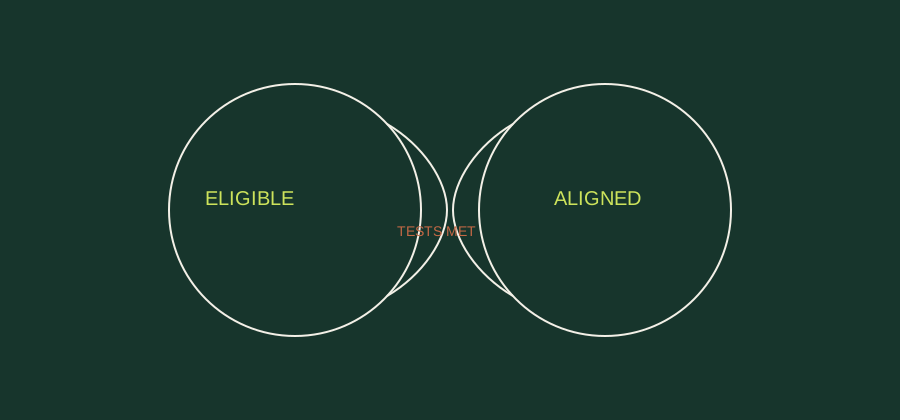
Taxonomy figures can use similar words for different stages of analysis. An activity can be covered by a classification system without meeting every condition for alignment. If a reader treats coverage and alignment as the same result, a percentage can be overstated before the underlying evidence is opened.
The distinction is easiest to handle as a sequence of tests.
Begin with the activity
A taxonomy classifies economic activities, not the general character of a company. One company can operate several activities. Some can fall within the taxonomy’s current scope while others do not.
The European Commission describes the EU Taxonomy as a classification system that defines criteria for economic activities aligned with a net-zero pathway and broader environmental goals. Use the current legal and technical materials for the activity and reporting period in question.
Ask which activity generated the reported turnover, capital expenditure, or operating expenditure. Do not infer activity-level treatment from a company name or sector label.
Test eligibility first
Eligibility asks whether an activity is described within the taxonomy framework. It is a scope test. It does not, by itself, show that the activity meets the technical conditions for alignment.
Record the taxonomy objective and activity description used by the reporting entity. Then check the denominator. A percentage of turnover answers a different question from a percentage of capital expenditure. A figure based on covered portfolio companies can differ from one based on the full portfolio.
Useful review fields include:
- reporting entity and period;
- economic activity;
- environmental objective;
- numerator and denominator;
- turnover, capital expenditure, or operating expenditure basis;
- taxonomy version or delegated act used;
- treatment of activities for which data was unavailable.
Then test alignment
Alignment requires more than eligibility. In the EU framework, the reviewer must examine substantial contribution criteria, the “do no significant harm” conditions, and minimum safeguards. The specific technical screening criteria depend on the activity and objective.
This creates several possible outcomes. An eligible activity can be aligned. It can fail one test. It can lack enough information for the reporting entity to confirm a test. It can also be reported under a transition or enabling category with additional context.
Do not turn missing evidence into a passed test. Record “not demonstrated” when the source does not provide enough information. That is different from a confirmed failure, but it is also different from alignment.
Reconcile the percentage
When a report shows a taxonomy percentage, rebuild it from the disclosed parts where practical. Identify which activity values enter the numerator, which population forms the denominator, and how estimates or missing values are treated.
Compare like with like. A company-level capital-expenditure alignment figure cannot be compared directly with a fund-level turnover figure without explaining the change in unit and boundary. Likewise, reported eligibility in one year can rise because the taxonomy’s coverage changed, not because the underlying activity became more sustainable.
Use a two-column conclusion
A short conclusion can keep the concepts separate:
- Eligibility: what portion of the stated denominator relates to activities covered by the taxonomy?
- Alignment: what portion was shown to meet all required tests, using which evidence and date?
Add a third line for data limitations. This stops the result from becoming a single unexplained percentage.
Taxonomies can improve consistency only when readers keep their sequence intact. Coverage is the entry point. Alignment is the result of additional tests. A careful review states both and does not let one stand in for the other.